
Downloads & Resources / Research & Perspectives
Measuring performance, not just material strength
How Construck’s system-level research connects component properties, soil–water interaction, numerical studies and the measurements still needed for physical verification.
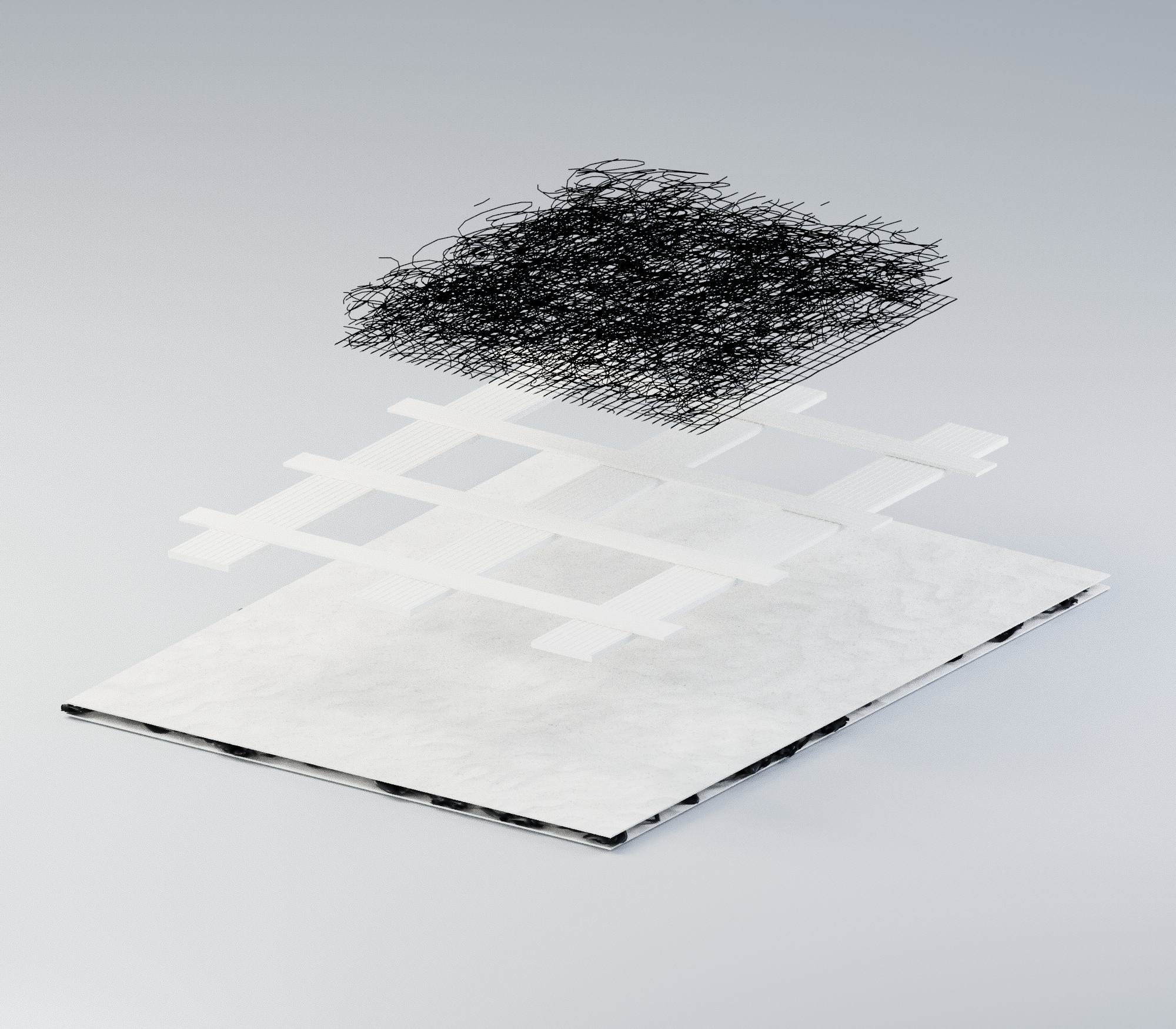
Begin with the assembly
A slope-protection system is more than a facing material. Ground conditions, reinforcement, anchors, drainage, the toe and the interfaces between these components influence the behaviour of the assembled works. A material property is an important input, but it does not describe how the whole configuration responds to a particular site and loading history. Construck’s research approach therefore begins with an engineering mechanism and a defined assembly.
This perspective extends the existing report on complete protection systems. Its purpose is to explain how evidence should be organised when developing or reviewing a product configuration. It is not a design calculation, a test certificate or a declaration that a material or system has met a universal performance threshold.
Define what is being investigated
The published Plus 200 chamber programme considers soil, facing, reinforcement, drainage and anchorage together. The reviewed Rev 1 method describes a reference geometry with a 3 m retained sand height, 4 m width, 6 m inward bench and 70° face, within a 240-hour programme window. Those figures define a proposed investigation. They are not allowable product dimensions, service ratings or a statement that the programme has been physically completed.
The useful research question is how water entry, separate drainage outlets, pressure, facing deformation, grid response and toe behaviour relate through time. Keeping the configuration explicit makes it possible to ask what was observed, what was assumed and which explanation the evidence can actually support. Changes to a connection or drainage detail may change the question that needs to be tested.
Read numerical evidence within its limits
The numerical assessment reproduced on the research page examines pressure-release paths under stated modelling assumptions. The results show how the system responds under different conditions and which mechanisms deserve the closest attention in physical testing.
The release law and load redistribution are not physically validated by those calculations. The reproduced charts are calculated histories and checks, not measured chamber records. The model, its assumptions and the measurements still to come belong together whenever the work is summarised.
Connect the prediction to a measurement
A useful next step is to identify the observations needed to test the proposed explanation. In the published method, water accounting, separate outlets, pressure, facing movement, reinforcement response and toe behaviour provide the measurement framework. A physical investigation would need a traceable record of the assembled specimen, the applied conditions and the observations through the programme.
The reviewed method still contains blank physical-result fields. Filling those fields requires actual measurement and a test conclusion; an animation cannot fill that gap. The supplied numerical replay helps communicate a saved study sequence, while the Plus 400 Smart film explains sensing routes and representative displays. Neither should be relabelled as a completed physical test or a live monitoring record.
Keep application and evidence connected
Plus 200 and Plus 400 have different configurations and connection details. A finding from one cannot automatically be transferred to the other, or to another geometry, loading condition or installation. The same discipline applies across Construck’s rockfall, hydraulic, containment and coastal programmes: each has its own mechanism, configuration and verification needs.
Field photographs add another useful kind of evidence. They can show access, terrain, construction context and the installed assembly. They do not, by appearance alone, establish an instrumented response or service life. Project Suite, technical records and professional review can help keep these different evidence types connected without treating them as interchangeable.
The practical outcome is a clearer research record: a defined question, a documented assembly, an explicit prediction, the measurements required to challenge it and a conclusion limited to what was actually established. That record helps product development move forward while keeping engineering decisions tied to the right evidence.